
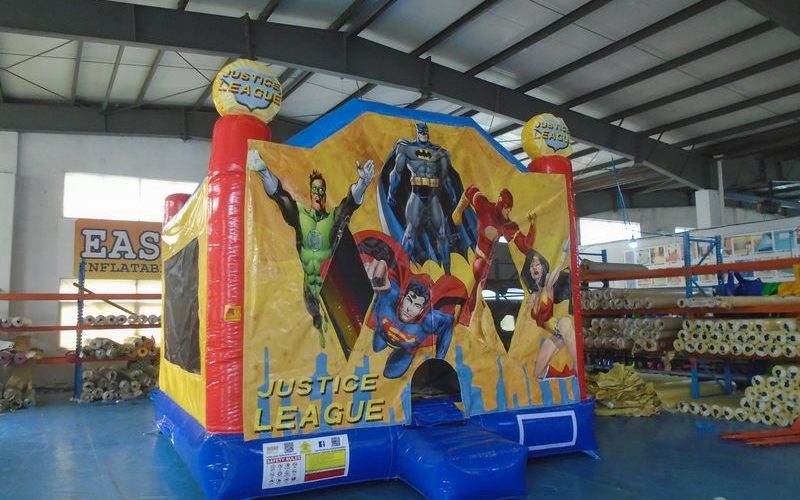
In Canada, whether you are hosting a small backyard birthday or a large community festival, determining the maximum capacity of an inflatable is the most important safety decision you will make.
While every unit has its own manufacturer specifications, there are universal rules and hidden dangers that every Canadian operator must understand before the party starts.
1. How to Determine the Real Capacity
There is no “one-size-fits-all” number. The safe capacity of a bouncy castle is determined by a combination of Physical Space and Total Weight Limit.
- Standard Residential Units: Typically allow 3–5 children, with a total weight limit of 300–500 lbs.
- Commercial-Grade Units: Professional rental fleets use heavy-duty units that can often hold 6–10 children, with total weight limits exceeding 1,000 lbs.
- The “Data Plate” Rule: In Canada, you should always check the Manufacturer Data Plate located near the blower tube. It explicitly lists the maximum number of users and the allowed weight per individual.
2. Why Overcrowding is a Critical Safety Risk
It’s tempting to let “just one more” child in, but exceeding the limit changes the physics of the inflatable in dangerous ways:
Collision Injuries
Over 70% of bouncy castle injuries are caused by collisions. When a 12-year-old and a 5-year-old jump together in a crowded space, the smaller child is often “thrown” into the wall or crushed by the older child. This leads to concussions and broken bones.
The “Flipping” Hazard
Every inflatable is engineered with specific Anchor Points. When too many children move to one side at once, the center of gravity shifts. This can cause the unit to tip or flip, even if it is properly staked into the ground.
Structural Stress
Exceeding the weight limit puts immense pressure on the seams and blowers. A commercial unit made of 0.55mm PVC is tough, but constant overloading can lead to a “blow-out” or motor failure, leading to rapid deflation and potential suffocation risks.
3. Best Practices for Canadian Operators
To manage capacity effectively and stay compliant with TSSA or local safety guidelines:
- Group by Size, Not Just Age: Never mix toddlers with teenagers. Even if the “number” of kids is low, the weight difference creates a dangerous “trampoline effect” for the smaller children.
- Active Supervision: A supervisor must be at the entrance at all times, physically counting heads as children enter and exit.
- Monitor the Wind: In Canada, wind gusts can change quickly. If a unit is near its weight capacity, it is more susceptible to being moved by wind. If gusts exceed 38 km/h, evacuate the unit immediately.
Frequently Asked Questions
Q: Can adults jump with their kids? Only if the unit is explicitly rated for adult weight. Most residential units are not. Even for commercial units, mixing adults and children is highly discouraged due to the extreme risk of collision injuries to the child.
Q: What if the kids are small? Can I fit more? No. Even if the weight limit isn’t reached, physical space matters. Children need a “buffer zone” to jump safely without knocking heads. Stick to the maximum occupancy number regardless of the children’s size.