
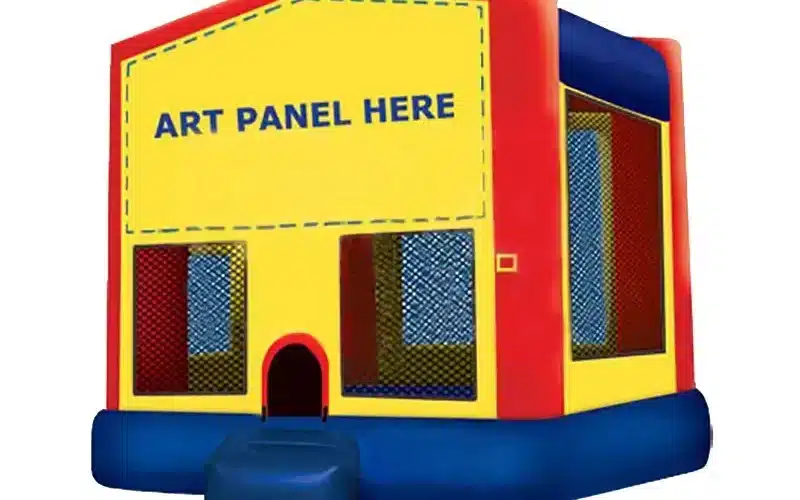
In Canada, operating or renting a bouncy castle isn’t just about fun—it’s about strict compliance with safety regulations. Whether you are a commercial operator in Ontario, a school event organizer in BC, or a parent planning a backyard party, knowing how to identify a “legal” unit is critical for insurance and child safety.
Here is how to verify if an inflatable meets the required safety benchmarks in the Canadian market.
1. Look for the TSSA or Provincial Certification Label
In provinces like Ontario, the Technical Standards and Safety Authority (TSSA) regulates all high-profile inflatables.
- The Check: Every commercial inflatable must have a visible data plate or tag that includes a unique serial number, the date of manufacture, and the manufacturer’s information.
- Why it Matters: In many jurisdictions, operating a unit without these markings at a public event is illegal. Furthermore, Canadian insurance companies may deny claims if an accident occurs on a non-certified unit.
2. Compliance with EN14960 or ASTM Standards
While Canada references various codes, EN14960 (the European standard for inflatable play equipment) and ASTM F2374 are the recognized “gold standards” for design and manufacture.
- The Check: Check the technical label sewn onto the unit (usually near the blower tube). It should explicitly state compliance with these standards.
- Key Features: These standards dictate critical safety dimensions, such as the minimum height of containing walls and the required “impact area” at the exit of a slide to prevent injuries.
3. Flame Retardant and Lead-Free Certification
Canadian health and fire safety laws are among the strictest in the world. A compliant unit must be built to protect children from chemical and fire hazards.
- The Check: A compliant unit must be made of fire-retardant PVC vinyl. Professional operators should be able to provide a “Flame Test Certificate” (such as NFPA 701) upon request.
- The Material: The fabric must be lead-free and phthalate-free, ensuring it is safe for skin contact, which is essential for younger children.
4. Engineering of Anchor Points (Wind Load)
In the Canadian climate, wind is the most significant safety risk. A compliant unit must be engineered to stay grounded in gusts up to 38 km/h.
- The Check: A standard 13’x13′ castle must have at least 6 to 8 heavy-duty D-ring anchor points. These should be made of stainless steel or high-strength reinforced webbing, not just simple fabric loops.
- The Grounding: The manufacturer must provide clear specifications for the length of ground stakes (usually at least 15-18 inches) or the specific weight of sandbags required for indoor setups.
5. The “Finger-Safe” Mesh Test
Safety standards also cover the smaller details that prevent minor but painful injuries.
- The Check: Examine the netting on the windows. The mesh must be small enough that a child cannot put their finger through it (known as finger-safe netting).
- Why it Matters: This prevents entanglement and finger dislocations if a child falls against the wall while jumping.
Frequently Asked Questions (FAQ)
Q1: Is TSSA certification mandatory for backyard parties in Ontario?
While TSSA regulations are primarily enforced for public events (festivals, schools, community centers), many professional insurance providers in Canada require TSSA-compliant equipment even for private residential rentals to minimize liability.
Q2: What is the maximum wind speed allowed for a bouncy castle in Canada?
According to Canadian safety standards, most commercial inflatables must be deflated immediately if wind speeds or gusts exceed 38 km/h (approx. 24 mph). Always use a reliable weather app or anemometer to monitor local conditions during your event.
Q3: Does “Commercial Grade” always mean it is safety-certified?
Not necessarily. “Commercial Grade” refers to the durability of the material (usually 18oz PVC), while safety certifications (like EN14960) refer to the engineering and design safety. Always verify the compliance markings on the unit’s data plate.
Q4: How many anchor points are required by law?
For a standard 13’x13′ bouncy castle, a minimum of 6 to 8 heavy-duty anchor points is required. Each point must be secured with a stake at least 15 inches (38 cm) deep into the ground, or an equivalent weight (usually 50-100 lbs per point) if set up on a hard surface.